新手上路
四星級會員
- 舊站積分
- 715
- 舊站發表文章數
- 2969
|
 發表於 2006-11-28 00:58:11
|
顯示全部樓層
Lisa Della Casa 簡介
由網站上節錄她的自傳..最後一段有提及最後四首歌為她的第一張商業錄音, 再由Decca的網站得知此錄音為1953年6月,但首版10'片聲音極差,或許是因為當時的壓片技術或者是與Decca的RIAA規格有關.
Lisa Della Casa的三大錄音---最後四首歌(1953), 費加洛婚禮(1955)及Arabella(1957), 請參考Decca網站.
http://www.deccaclassics.com/artists/della_casa/index.html
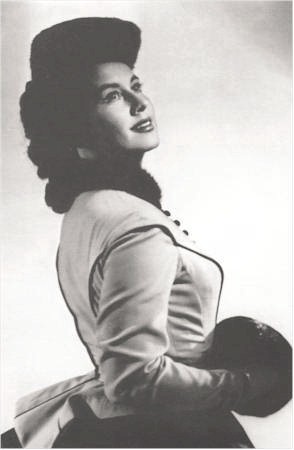
Lisa Della Casa as Arabella
From Wikipedia, the free encyclopedia
Jump to: navigation, search
Lisa Della Casa (born in Burgdorf on February 2, 1919) is a Swiss soprano who was famous for her interpretation in works by Mozart and Richard Strauss.
Born to an Italian-Swiss father (a doctor) and Bavarian-born mother, she studied singing under Margarete Haeser at Zurich Conservatory and made her operatic debut as the title role in Puccini's Madama Butterfly at Zoloturn-Biel Municipal Theater in 1940. She joined the ensemble of Zurich Municipal Opera House in 1943 (stayed there until 1950) and had sung various parts from Queen of the Night in Mozart's Die Zauberflöte to Dorabella in Così fan tutte. In 1947, she married Yugoslavian-born journalist Dragan Debeljevitch.
Della Casa sang the part of Zdenka in the performance of Richard Strauss' Arabella at Zurich Municipal Opera House to Maria Cebotari's Arabella in 1946. Cebotari recognized her talent and introduced her to Salzburg Festival, in 1947 where she sang Zdenka again in Arabella - starring Maria Reining and Hans Hotter. After the performance, Richard Strauss himself commented: "Miss Della Casa will become new Arabella some day."
In the same year, she made her debut at Vienna State Opera House by singing Gilda in Verdi's Rigoletto. Soon she moved to Vienna and joined the ensemble of Vienna State Opera House. In 1949 she made her debut at La Scala Opera House in Milan as Sophie in Richard Strauss' Der Rosenkavalier and Marcelline in Beethoven's Fidelio. Victor de Sabata, the musical director of La Scala at that time, persuaded her to move to La Scala. But she chose to stay in Vienna.
Della Casa made her British debut by singing Countess Almaviva in Mozart's Le nozze di Figaro at Glyndebourne Festival and then sang the title role in Arabella (her signature role) for the first time in her life - at Bavarian State Opera House in Munich in 1951. She sang Eva in Wagner's Die Meistersinger von Nürnberg at Bayreuth Festival in 1952.
She experienced three special stages in her career in 1953; 1) debut at Covent Garden Royal Opera House in London by singing Arabella in Bavarian State Opera Company's performances at Covent Garden, 2) singing the part of Octavian in Der Rosenkavalier for the first time in her life - at Salzburg Festival, 3) debut at Metropolitan Opera House of New York (the Met) as Countess Almaviva in Le nozze di Figaro - she sang at the Met regularly until 1968. In 1955, she sang the part of the Marschallin in Der Rosenkavalier for the first time; it was a performance celebrating the opening of restored Vienna State Opera House. As a result, she had sung all three parts - the Marschallin, Octavian, Sophie - in Der Rosenkavalier.
Salzburg Festival was one of the most important site in her career. She sang Ariadne in Richard Strauss' Ariadne auf Naxos and Donna Elvira in Mozart's Don Giovanni in 1954, (once again) Donna Elvira in 1956, Chrysotemis in Richard Strauss' Elektra and Countess Almaviva in 1957 (she also had a recital at the Festival in the same year), Arabella in 1958, Pamina in Die Zauberflöte in 1959. On 26 July 1960, newly-built Salzburg Festspielhaus opened by a performance of Der Rosenkavalier under Herbert von Karajan. Della Casa sang the part of the Marschallin in this performance with Sena Jurinac's Octavian and Hilde Gueden's Sophie.
She surprised the audience by singing the title role in Salome at Bavarian State Opera House in Munich in 1961. Since the performances, she tried a few dramatic parts in Italian operas such as Desdemona in Verdi's Otello and the title role in Puccini's Tosca. But finally she returned to lyric parts in Mozart and Richard Strauss operas. In 1963, when famous German soprano (and her colleague at Vienna State Opera house) Elisabeth Schwarzkopf made her debut at the Met as the Marschallin in Der Rosenkavalier, Della Casa sang Octavian to her Marschallin.
Since mid-1960s her voice began to decline, and she diminished performances. In 1974, she sang Arabella at Salzburg Festival; after the performance, she surprised everyone by announcing that the very performance was her last performance and retired from the stage.
Della Casa's delicate, silvery-toned beautiful lyric voice ideally fit for the heroines of Mozart and Strauss operas. Some critics point out that she lacks brilliant vocal technique which Elisabeth Schwarzkopf had, but the naturalness in her singing has another kind of charm. She was a critical and reflective person admitting that she did not like "music business" with its intrigues and vanities.
She left several complete opera recordings mainly for Decca label; her interpretations of Countess Almaviva in Le nozze di Figaro (Erich Kleiber conducting) and the title role in Arabella (Georg Solti conducting) are still regarded the very best. She made the first commercial recording of Richard Strauss' Vier Letzte Lieder (Karl Böhm conducting) in 1953 for Decca, and many classical music lovers claim the recording to be the greatest one.
Comment:
Robert Steane wrote: 「Della Casa remains one of the best of all sopranos in Richard Strauss. Her voice has that touch of spring and silver that Strauss loved and wrote for; her tone will float and soar. She is also very beautiful, very feminine, suggesting a wholly appealing kind of fragility, tender and unmannered... The feeling of something too cautious and placid, limits some of her Mozart. Her Elvira and Countess lack an element of command and dramatic projection surely needful in both... Nevertheless it is certainly very lovely singing...But it is probably for Arabella that della Casa will be most widely remembered... She makes an immediate impression of beauty and graciousness with her first phrases, sings with soaring abandon as she looks forward to the appearance of 『der Richtige』.」 |
|

 樓主: Emilgilels


 ]
 ]
 ] [}