新手上路
五星級會員
- 舊站積分
- 3604
- 舊站發表文章數
- 5787
|
 發表於 2018-9-5 11:50:38
|
顯示全部樓層
The Subjective and Objective Evaluation of Room Correction Products
幻燈片(PDF檔):
https://drive.google.com/file/d/ ... ZTUxMGQ4/view?hl=en
1. The six-seat spatially averaged curves (slide 23) of the room corrections do not explain listeners' room correction preferences as well as the spatially averaged curves taken at the primary seat (slide 24). This makes perfect sense since all of the listening was done in the primary listening seat.
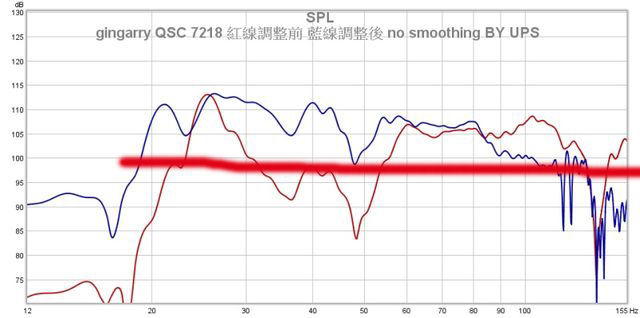
2. Looking at slide 24, the most preferred room corrections produced the smoothest, most extended amplitude responses measured at the primary listening seat. The largest measured differences among the different room corrections occur below 100 Hz and around 2 kHz where the loudspeaker had a significant hole in its sound power response. The room corrections that were able to fill in this sound power dip received higher preference and spectral balance ratings.
3. A flat in-room target response is clearly not the optimal target curve for room equalization.
The preferred room corrections have a target response that has a smooth downward slope with increasing frequency. This tells us that listeners prefer a certain amount of natural room gain. Removing the rom gain, makes the reproduced music sound unnatural, and too thin, according to these listeners. This also makes perfect sense since the recording was likely mixed in room where the room gain was also not removed; therefore, to remove it from the consumers' listening room would destroy spectral balance of the music as intended by the artist. |
|

 樓主: jackyamg


 [/B]
 ]